
Splash
January 25, 2010Long shadows
January 25, 2010
Cathay cinema
October 29, 2009
^ Memories of movies at Cathay.

^ Enchanting glow.
Protect our environment
October 26, 2009
Symmetry
October 17, 2009
Beautiful morning
October 10, 2009
Dewdrops
October 6, 2009May this dewdrop be a sign of hope for the families and survivors of the recent natural disasters to rebuild their lives.

Shots of F1 Night Race 2009
September 28, 2009Sharing with you some photos of the Formula 1 cars in action.
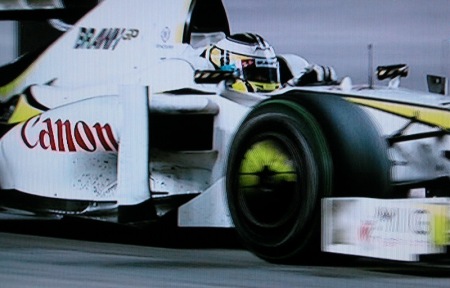
^ The Button from Britain. Jensen Button in his Brawn Mercedes.
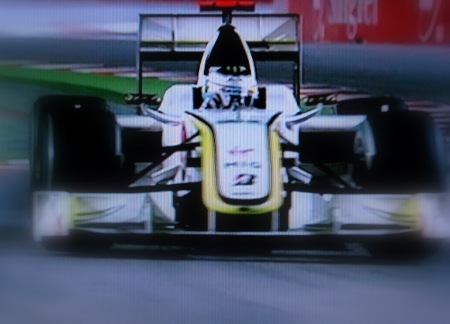
^ Button negotiating the curves.

^ A view from the cockpit in the hot-seat.
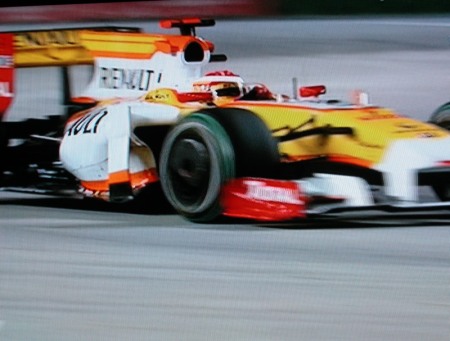
^ Renault at the sharp bend.
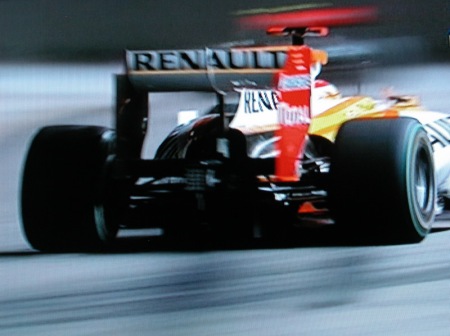
^ Burning rubber.

^ Lewis Hamilton of McLaren Mercedes taking the victory podium.
And in case if you are wondering which part of the circuit these photos were taken, I wasn’t physically at the Marina circuit. Unable to afford the admission fees, it was just a dream to capture the action while sitting in front of my television set with my camera mounted on a tripod.
You’ve Got Mail
September 24, 2009Typing a few sentences on the keyboard, a click, and your message is sent to your recipient in nano seconds. In the past, it was snail mail that sometimes took some weeks to reach your intended recipient residing in some faraway country…with a postage stamp pasted on the top right hand corner of the envelope.
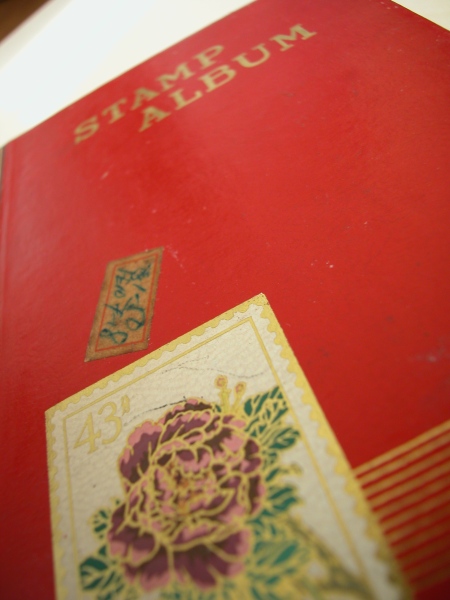
^ A small red postage stamp album bought in 1972. Costing $1.50, the album is about half the size of an A4 paper and has pages with sleeves to hold postage stamps. Serious collectors will usually have albums of a larger size to segregate their collections of postage stamps according to countries, events etc.
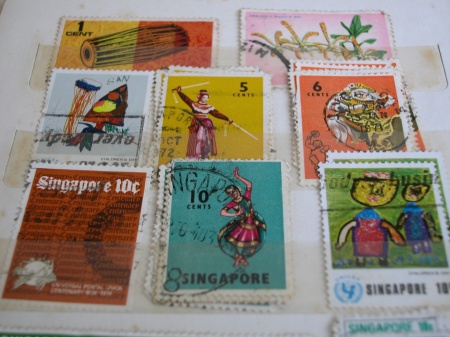
^ Some of the common postage stamps collected during the early 70s during primary schooldays. These were stamps bearing images of Singapore’s culture such as the Indian dance, Chinese wayang, lion dance, flowers like the orchid collection, and the crayon drawings by children.
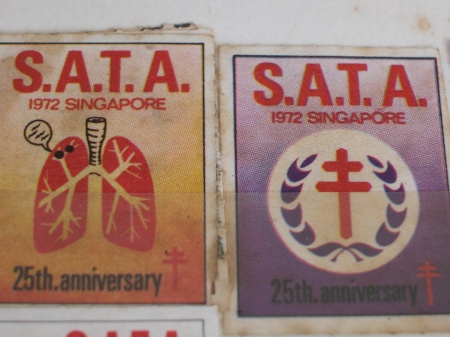
^ S.A.T.A, the acronym for Singapore Anti-Tuberculosis Association. TB (short form for tuberculosis) is an infectious disease caused by mycobacteria that can be transmitted between humans via sneezing, coughing, sputum. One protective measure is vaccination. Many may remember the BCG (Bacillus Calmette-Guerin) vaccination scar we received during infancy and another booster jab during primary 6. Ouch!!
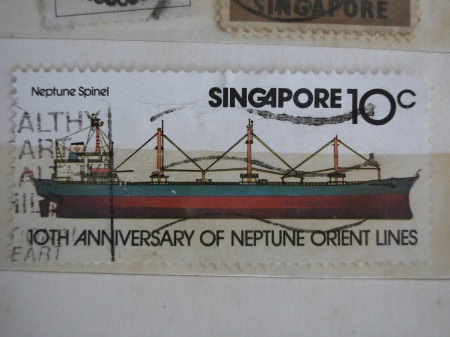
^ A stamp commemorating the 10th Anniversary of NOL with a drawing of MV Neptune Spinel. She’s a 14,967 DWT General Cargo Tramp built in 1978.
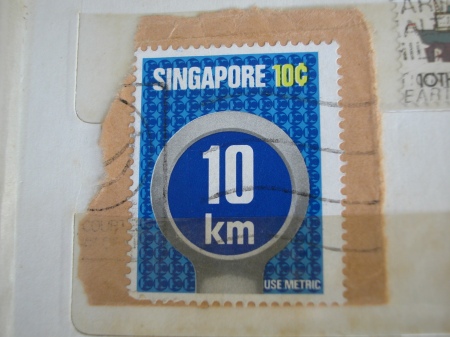
^ During the days of our parents, units of measurement for weight, volume, distance comes in the form of lbs, ounces, cubic feet, gallons, inches, miles. All was changed to using metric when we started school at primary level.
The metric system was first proposed by Gabriel Mouton in 1670. He was the Vicar of St Paul’s Church in Lyons as well as an astronomer. He was given recognition by the authorities to be the originator of the metric system.
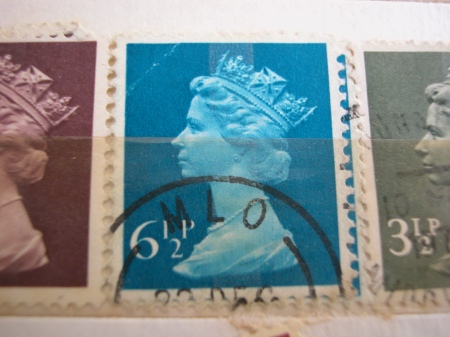
^ A postage stamp of six-and-a-half pence bearing the image of Queen Elizabeth. Some of these postage stamps from foreign countries were traded among classmates / neighbourhood kids for added variety to our collection.

^ An image of Pope Paul VI commemorating his pilgrimage to Jerusalem in 1964. He was Archbishop of Milan and later became the head of the Roman Catholic Church (1963-1978). During his papacy, he encouraged and fostered ecumenical relations and was known as the “pilgrim pope” for his many pilgrimages to the various countries that spanned across the 7 continents. He also saw to the close of the Second Vatican Council (Vatican II) which was held from 1962-1965 in Rome.
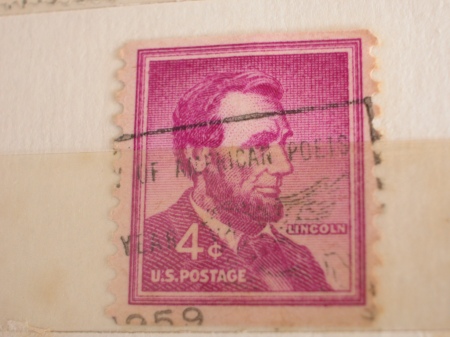
^ A United States postage stamp bearing the face of Abraham Lincoln. He was the 16th President of the United States. During his presidency from March 1861 to his assassination in April 1865, he successfully led his country through the American Civil War and ending slavery.

^ Christmas 1974. This stamp was probably traded with someone else given that I do not have any friends nor relatives residing in Australia at that time.
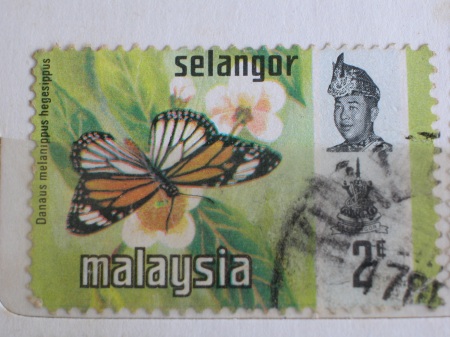
^ Stamps from across the Causeway are also easily obtained. Corresponding with relatives and friends through letters especially during festivities like the Chinese New Year provided an opportunity to expand the collection.
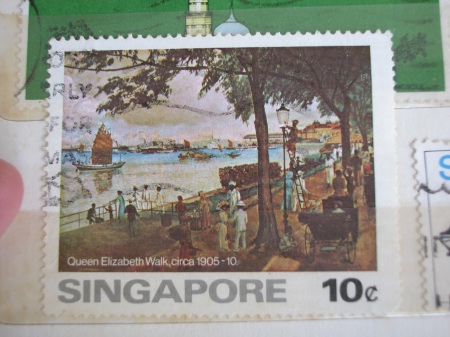
^ This postage stamp bears the scene of Queen Elizabeth Walk during 1905-1910. Much of the landscape of Queen Elizabeth walk has changed after a century to its present. So were the use of stamps for pasting onto the envelope which holds the reflection of ourselves in the style and neatness expressed in our handwriting seen on the letters and postcards we send via postal mail…time to find that bottled ink known as Quink and the Hero fountain pen kept somewhere in the drawers.
Monster Guns
September 8, 2009A little further after Changi Chapel Museum, there is another historical site which was a strategic location in the defence of Singapore against the Japanese invasion during World War II. Along Cosford Road, this was where the so called “monster guns” once existed. “Monster Guns” so named because of its colossal size.

^ The Johore Battery is a war memorial site in Singapore that dates back to the early 1940s. Some of the other major coastal batteries were the Pasir Laba Battery, Labrador Battery and the Fort Siloso Battery. The British had anticipated that the direction of the Japanese invasion would come from the sea. As such, the defence-plan was to strengthen the coastal defences of the island. This led to the building of the Johore Battery in 1939 as a coastal artillery gun emplacement site.
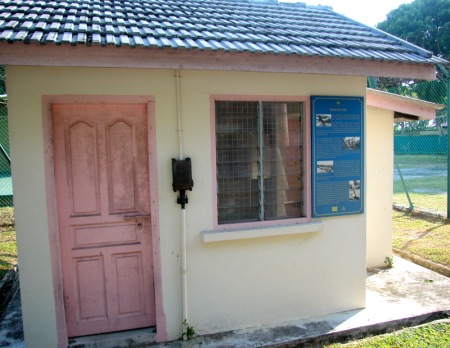
^ This old hut was sited near the fenced-up area of Johore Battery in Cosford Road. It was said that there existed a labyrinth of tunnels built for the purpose to store ammunition for the guns. The monster guns were the biggest and heaviest coastal artilleries and were able to pierce the armour of battleships. Before Singapore fell into the hands of the Japanese, it is said that orders were sent out to destroy the guns. Tunnels were sealed up after the war.
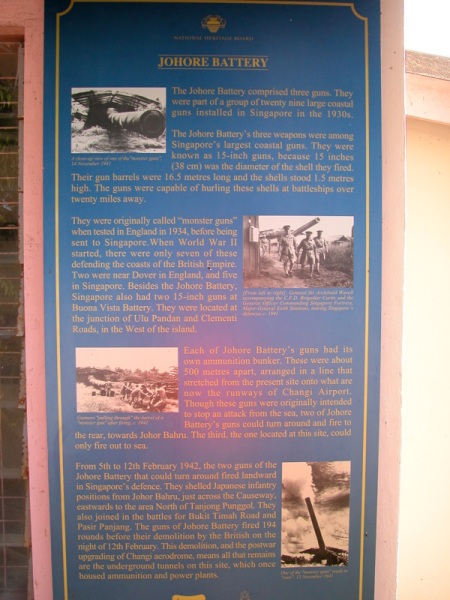
^ Below is the text from the display panel that makes reading easier on your eyes.
The Johore Battery comprised three guns. They were part of a group of twenty large coastal guns installed in Singapore in the 1930s.
The Johore Battery’s three weapons were among Singapore’s largest coastal guns. They were known as 15-inch guns, because 15 inches (38 cm) was the diameter of the shell they fired. Their gun barrels were 16.5 metres long and the shells stood 1.5 metres high. The guns were capable of hurling these shells at battleships over twenty miles away.
They were originally called “monster guns” when tested in England in 1934, before being sent to Singapore. When World War II started, there were only seven of these defending the coasts of the British Empire. Two were near Dover in England, and five in Singapore. Besides the Johore Battery, Singapore also had two 15-inch guns at Buona Vista Battery. They were located at the junction of Ulu Pandan and Clementi Roads, in the West of the island.
Each of Johore Battery’s guns had its own ammunition bunker. These were about 500 metres apart, arranged in a line that stretched from the present site onto what are now the runways of Changi Airport. Though these guns were originally intended to stop an attack from the sea, two of Johore Battery’s guns could turn around and fire to the rear, towards Johor Bahru. The third, the one located at this site, could only fire out to sea.
From 5th to 12th February 1942, the two guns of the Johore Battery that could turn around fired landward in Singapore’s defence. They shelled Japanese infantry positions from Johor Bahru, just across the Causeway, eastwards to the area north of Tanjong Punggol. They also joined in the battles for Bukit Timah Road and Pasir Panjang. The guns of Johore battery fired 194 rounds before the demolition by the British on the night of 12th February. This demolition, and the postwar upgrading of Changi aerodrome, means all that remains are the underground tunnels on this site, which once housed ammunition and power plants.

^ A replica of the “monster guns”.
They were the biggest guns to be installed outside Britain during World War II. The site was named Johore Battery as it was learnt that the Sultan of Johore made a donation to the British in support of the war effort during World War II.


 Yesterday....Today....Tomorrow